
How Device Security Affects Online Casino Accounts

Evaluating the safety of a web-based entertainment profile requires looking beyond standard password management and examining the hardware endpoint itself. Many people assume that if a remote server uses advanced encryption, their personal login details remain completely shielded from outside interference regardless of the machine they use for browsing. Yet, the physical terminal or phone acts as the primary access point, meaning its internal operating condition directly influences whether authorization tokens and personal preferences stay confidential. If malware or unpatched software resides on the local drive, remote defenses cannot prevent local interception during an active session.

Operating systems and browsers process data continuously while users interact with remote entertainment platforms. Whenever an individual authenticates their identity, local scripts and memory buffers temporarily hold sensitive identifiers. If the underlying hardware lacks current security patches or runs unauthorized extensions, those temporary files become vulnerable to unauthorized reading. Therefore, maintaining a clean system environment is essential for preserving the privacy of account sessions, a reality that reinforces why software updates matter just as much as strong passwords. Hardware health directly dictates whether data travels safely from the terminal to the centralized infrastructure.

People often rely solely on complex passwords to keep their profiles safe, believing that a long sequence of characters renders unauthorized access virtually impossible. For additional context, bonanza sweet can be considered alongside this overview. However, credentials alone cannot stop malicious actors if the local hardware has been compromised by keyloggers or session-hijacking scripts. A strong password entered on an infected machine is immediately exposed to whoever controls the malicious software. Recognizing this dynamic helps shift the focus toward comprehensive endpoint maintenance, and you can explore broader context regarding digital infrastructure by reviewing this for additional technical perspectives.

Platform operators implement strict cryptographic protocols on their end, utilizing secure sockets layer technology and multi-factor authentication requirements to protect user profiles. Despite these server-side safeguards, the boundary of protection stops where the user terminal begins. If an endpoint permits unauthorized applications to run with elevated privileges, those background processes can monitor network traffic or duplicate authentication cookies. Consequently, server-side resilience cannot fully compensate for vulnerabilities present on a personal tablet, laptop, or smartphone.

Ultimately, treating the access device as a vital link in the security chain provides a realistic framework for evaluating online safety measures. Rather than assuming that remote servers handle all protective duties independently, recognizing the role of local hardware integrity allows for more informed assessments of digital risk. By keeping operating systems updated, avoiding unverified software downloads, and monitoring system performance, individuals can maintain a much clearer understanding of how endpoint hygiene directly impacts the overall stability of remote account sessions.

How Online Casino Identity Theft Can Occur

When a user steps into an online casino, the first interaction is a registration screen that asks for name, address, date of birth and a payment method. These details are not merely administrative; they become the foundation of a digital identity that the operator must safeguard. The data set is large enough to allow a potential thief to impersonate the holder, yet small enough that a single breach can expose a player’s entire financial footprint.

The registration flow usually begins with a simple form. Behind the scenes, the information is transmitted over HTTPS and stored in a database that claims to use encryption at rest. Yet many operators rely on legacy systems that encrypt only the most sensitive fields, leaving other columns vulnerable to accidental exposure. If a hacker gains read access to the database, the passport number, bank account and credit card details can be harvested in bulk.

Even when encryption is applied, key management is a weak link. Keys stored on the same server as the database or in an unsecured key vault can be copied by an insider or a remote attacker who has already compromised the application layer. For additional context, real online casino canada can be considered alongside this overview. Once the key is in hand, the attacker can decrypt the entire data set and create a clone of the victim’s account without the need for any additional credentials.

Phishing campaigns target the same set of credentials that players use to log in. An attacker may send an email that looks like a password reset request, directing the user to a fake login page that captures the username and password. The stolen credentials can then be combined with stolen payment details to open a new account on a rival platform or to move funds from the original account.

Another vector involves session hijacking. When a user logs in, the server issues a session token that is stored in a cookie. If the cookie is not flagged as HttpOnly or Secure, a man‑in‑the‑middle can sniff the token over an unsecured Wi‑Fi network. The attacker can then impersonate the user in real time, making deposits, placing bets and withdrawing winnings before the legitimate owner notices. For more information on how to protect yourself against such attacks, visit .

How Cryptocurrency Influenced Online Casinos

The integration of digital assets into web-based betting platforms represents a major shift in how financial transactions occur on the internet, and you can read more about these shifts via this . For another practical angle on this process, real online casino may be useful. Traditional financial systems long governed online casinos through credit cards and bank wires, creating friction points for players globally. When alternative currency networks emerged, the betting industry quickly adopted them to bypass traditional merchant hurdles. This technological convergence changed operational workflows, altered customer expectations, and redefined payment processing speeds across the sector.

At the center of this shift lies the core technology of cryptocurrency. Unlike standard fiat money handled by centralized banking institutions, blockchain systems operate on decentralized ledgers. Online casinos integrated these networks to facilitate peer-to-peer value transfer without intermediaries. This architectural change drastically reduced administrative overhead and eliminated the chargeback risks that traditionally plagued merchant operators. Players gained the ability to move funds across international borders instantaneously, removing days of waiting periods associated with standard financial clearings.

Account Access and Use

Another major area where cryptocurrency influenced online casinos is user privacy and account setup. Conventional gaming sites require extensive personal data collection to comply with strict banking regulations. Blockchain-native platforms introduced alternative onboarding methods that rely on wallet signatures instead of traditional identity verification documents. While regulatory pressures still apply to licensed operators, the underlying flexibility of digital assets allowed casinos to offer pseudonymous betting options. This appeals to users who prioritize financial privacy and wish to avoid sharing sensitive banking details with third-party gaming merchants.

Furthermore, the introduction of blockchain tokens prompted the creation of provably fair mechanics. Independent auditing of game outcomes became transparent through cryptographic hashing. Players no longer need to blindly trust a casino operator’s internal random number generator; instead, they can verify the integrity of each individual wager using public keys and algorithms. This transparency shifted power dynamics, compelling traditional platforms to adopt similar verification features to remain competitive against decentralized alternatives.

  • At the center of this shift lies the core technology of cryptocurrency
  • Conventional gaming sites require extensive personal data collection to comply with strict banking regulations
  • Blockchain-native platforms introduced alternative onboarding methods that rely on wallet signatures instead of traditional identity verification documents
  • Independent auditing of game outcomes became transparent through cryptographic hashing
  • Regulatory bodies worldwide struggled to classify decentralized assets, leading to a fragmented legal environment

Security and Risk

Despite these functional advancements, the widespread adoption of cryptocurrency also introduced unique compliance challenges for online casinos. Regulatory bodies worldwide struggled to classify decentralized assets, leading to a fragmented legal environment. Operators must constantly adapt to shifting jurisdictional mandates regarding anti-money laundering protocols and consumer protection. Jurisdictions with permissive laws attracted numerous blockchain-focused betting sites, while strict markets instituted outright bans, creating a divided global market for digital asset gambling.

Costs and Practical Trade-offs

Looking ahead, the ongoing evolution of cryptocurrency will likely continue shaping the trajectory of online casinos. As scaling solutions improve transaction throughput and lower network fees, microtransactions and instant settlement features will become standard expectations for players. Operators that effectively balance technical innovation with regulatory compliance stand to capture significant market share. The relationship between digital currencies and web-based betting demonstrates how external financial technologies can permanently alter an entire entertainment industry.

How Online Casino Software Has Changed Over Time

Tracking the trajectory of how online casino software has changed over time requires moving past the assumption that early platforms were simply scaled-down versions of physical wagering floors. For a related practical reference, real money online casino canada can complement these steps. In reality, the architecture driving these systems was limited by bandwidth and processing power that constrained the visual fidelity and complexity of the experience found at this . Rather than replicating the precise mechanical nature of a land-based machine, developers initially focused on creating stable, server-side communication protocols that could process outcomes reliably across slow dial-up connections. This fundamental technical constraint dictated that an online casino of the late nineties prioritize transactional integrity over the immersive audio-visual presentations that define contemporary software interfaces.

Account Access and Use: Part 2

There is a prevalent belief that the evolution of these systems has been driven primarily by the pursuit of graphical realism. While visual complexity has increased, the internal logic of a casino software package has actually moved toward simplification in terms of data overhead. Modern browsers now execute complex instructions that were previously restricted to proprietary, downloadable applications. This transition allowed a casino to reach a wider audience without forcing users to manage bulky, potentially unstable executable files. Consequently, the software environment has shifted from a rigid, proprietary silo into a modular framework that integrates seamlessly with modern web standards, benefiting every active casino today.

Security architectures within the industry have also undergone significant revision, moving away from simple encryption to multi-layered, real-time integrity verification. The notion that early versions of an online casino operated on opaque, static code is often misunderstood by those expecting current standards of transparency. Early software relied on a fixed set of logic, which required developers to implement deep-seated auditing tools only after significant scrutiny from oversight bodies. By contrast, a contemporary casino uses live, cloud-synchronized ledgers that record every action. This engineering shift means the casino software of today functions more like a high-frequency financial interface than the static, pre-programmed games of the past.

Compatibility has become the defining characteristic of recent progress in the sector. Previously, the user experience was tethered to a specific desktop configuration, which created a narrow channel of access. The move toward responsive, hardware-agnostic design changed how a casino engages with its audience, ensuring that functionality remains consistent whether the system is accessed via a mobile device or a high-performance workstation. This move toward universal accessibility required engineers to rewrite the core code of the casino to function in diverse environments, effectively decoupling the wagering logic from the device’s operating system.

Metrics and Performance

Looking at how the back-end infrastructure has matured explains why modern performance feels more fluid. In previous eras, a casino had to manage all data locally, creating bottlenecks during periods of high usage. Current software utilizes distributed networks that handle computations in real-time across various geographical nodes. This evolution has reduced latency and improved the overall responsiveness of every reputable casino. Rather than viewing the change as a simple upgrade in speed, it is more accurate to describe it as a complete reorganization of how data flow is managed between the client and the central server infrastructure.

  • There is a prevalent belief that the evolution of these systems has been driven primarily by the pursuit of graphical realism
  • Security architectures within the industry have also undergone significant revision, moving away from simple encryption to multi-layered, real-time integrity verification
  • By contrast, a contemporary casino uses live, cloud-synchronized ledgers that record every action
  • This engineering shift means the casino software of today functions more like a high-frequency financial interface than the static, pre-programmed games of the past
  • This move toward universal accessibility required engineers to rewrite the core code of the casino to function in diverse environments, effectively decoupling the wagering logic from the
  • Looking at how the back-end infrastructure has matured explains why modern performance feels more fluid
  • Current software utilizes distributed networks that handle computations in real-time across various geographical nodes

Account Access and Use

Ultimately, the history of how online casino software has changed over time serves as a testament to the discipline of software engineering. Every update implemented in a modern casino is the result of years of refinement aimed at balancing computational efficiency with user security. By replacing heavy, proprietary programs with lean, browser-native applications, developers have ensured that the digital environment remains both accessible and secure. This continuous iteration ensures that the software powering a casino will continue to prioritize structural reliability over mere stylistic flourishes, maintaining the integrity of the process for all participants.

How Online Casino Payment Gateways Work

Transferring funds securely requires reliable technical infrastructure, and you can explore further technical contexts by checking out a helpful that outlines financial protocols. A related example such as 10 € bonus nach registrierung casino deutschland can help frame this account topic. When a player initiates a deposit at an online casino, the payment gateway immediately intercepts the transmission to protect sensitive details. This specialized software encrypts the data before it travels across public networks, ensuring that neither intermediaries nor malicious actors can intercept credit card numbers or account credentials. Every independent casino relies on these intermediaries to translate raw transactional requests into verified financial commands that traditional banks can process without error.

Account Access and Use: Part 2

Once the encryption phase concludes, the gateway routes the transaction request toward the designated banking network or card association. The receiving institution checks the account holder’s balance and verifies authorization almost instantaneously. If the funds are available, an approval code is sent back through the gateway to the casino system. This rapid exchange happens within seconds, updating the user balance so gameplay can begin immediately. The primary function of the payment gateway during this inbound stage is to act as a secure translator between disparate financial systems.

Withdrawals follow a similar yet more rigorous pathway due to anti-fraud obligations and licensing mandates. When requesting a payout, the player submits a withdrawal form through the cashier section of the casino. Before releasing the funds, the casino operator must review the request against internal security logs and regulatory rules. Once the compliance check clears, the payment gateway initiates an outbound transfer. This step often takes longer than a deposit because receiving banks apply their own verification procedures to inbound money transfers.

  • If the funds are available, an approval code is sent back through the gateway to the casino system
  • Withdrawals follow a similar yet more rigorous pathway due to anti-fraud obligations and licensing mandates
  • When requesting a payout, the player submits a withdrawal form through the cashier section of the casino
  • Before releasing the funds, the casino operator must review the request against internal security logs and regulatory rules
  • Once the compliance check clears, the payment gateway initiates an outbound transfer
  • Modern architecture points toward increasingly decentralized authentication methods, such as tokenization and direct bank-to-bank protocols, which reduce reliance on traditional card

Account Access and Use: Part 3

Modern architecture points toward increasingly decentralized authentication methods, such as tokenization and direct bank-to-bank protocols, which reduce reliance on traditional card networks. As financial technology evolves, a typical casino must adapt its payment gateway integrations to support alternative currencies and instant settlement systems. Despite these technological shifts, the core principle remains constant: the gateway must safeguard user data while guaranteeing accurate accounting for the operator. Maintaining trust depends entirely on how reliably these transactions are processed behind the scenes.

Account Access and Use

Future iterations of payment gateways will likely emphasize automated compliance checks and even faster clearing times. As global standards shift toward instant cross-border settlements, a modern casino operator must upgrade its transaction pipelines accordingly. Players expect transparency regarding fees, processing durations, and security measures at every stage of the transaction. Ultimately, the efficiency of these financial bridges dictates whether a user enjoys a smooth session at the casino or faces frustrating delays.

004632 – Copy

How Casino Slot Payout Caps Work

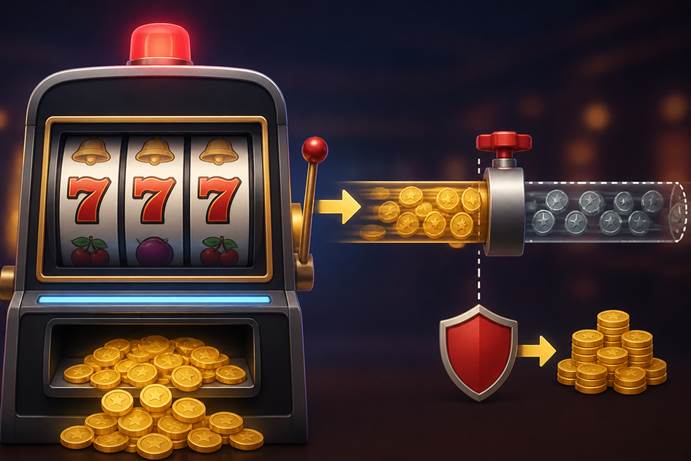
When you visit a casino, the flashing lights and enticing sounds of slot machines create an atmosphere where anything seems possible, yet the reality is governed by payout caps that limit the maximum amount any machine can dispense in a single session. A reference like http://simo-trial.de/ can provide another useful angle on the subject. These invisible boundaries are programmed into every slot machine to ensure the casino maintains its mathematical advantage while still offering the excitement of potential wins. For those researching how a casino regulates its biggest wins, exploring details at provides useful context on maximum win limits that vary between different machines and jurisdictions.

• The concept of payout caps is fundamental to how casino slot machines operate, though many players never consider these invisible ceilings until they encounter them firsthand

•         Understanding how slot payout caps work reveals the delicate balance casinos must strike between entertainment and mathematics

•         In contrast, standalone machines typically feature more modest caps that reflect their isolated nature and lower player contribution pools

What to Know About Payout

The concept of payout caps is fundamental to how casino slot machines operate, though many players never consider these invisible ceilings until they encounter them firsthand. Each slot machine contains a predetermined maximum payout value that cannot be exceeded regardless of how rare or valuable a winning combination might be. This cap exists in both physical and digital casinos, ensuring that even the most improbable jackpot remains within calculated parameters that preserve the house edge over time. The casino industry relies on these caps to maintain profitability while still offering life-changing sums that attract players seeking fortune.

Understanding how slot payout caps work reveals the delicate balance casinos must strike between entertainment and mathematics. While the presence of caps might seem restrictive, they actually enable casinos to offer larger potential payouts than would otherwise be mathematically feasible. Without these limits, the house edge would need to be significantly higher, making slot machines far less appealing to players. The caps allow for more generous individual payouts while maintaining the casino’s overall statistical advantage across thousands of spins from all players combined. This mathematical framework ensures that both the casino and players can coexist in a sustainable ecosystem of chance.

What to Know About Machines

The practical implications of payout caps become apparent when examining different types of slot machines and their respective maximum win potentials. Progressive jackpot slots often have the highest caps, with some reaching into the millions, but these extreme values are achieved through networked contributions from multiple machines or casinos. In contrast, standalone machines typically feature more modest caps that reflect their isolated nature and lower player contribution pools. Players who understand these distinctions can make more informed decisions about which machines offer the best balance between their entertainment budget and potential returns, transforming what might otherwise be a random guessing game into a more calculated approach to gaming.

Area

What to know

Context

The concept of payout caps is fundamental to how casino slot machines operate, though many players never consider these invisible ceilings until they encounter them firsthand.

Consideration

Understanding how slot payout caps work reveals the delicate balance casinos must strike between entertainment and mathematics.

Practical takeaway

The practical implications of payout caps become apparent when examining different types of slot machines and their respective maximum win potentials.

How Casino Experience Connects With Payout

For regular casino visitors, recognizing the presence of payout caps transforms the slot machine experience from a desperate pursuit of impossible riches into a more controlled form of entertainment where expectations align with mathematical reality. The flashing lights and celebratory sounds remain, but players who understand payout caps can set realistic expectations and choose games that match their entertainment goals rather than chasing impossible outcomes. This balanced perspective doesn’t diminish the thrill of winning but rather provides a framework for responsible participation in an activity governed by both chance and carefully calculated limits that ensure the casino remains viable while still offering genuine winning opportunities.

How Virtual Reality Could Transform Online Casinos

The assumption that internet wagering requires static, flat interfaces to maintain functionality overlooks the potential for spatial computing to redefine how users interact with digital environments. For another perspective on this account-related point, site casino en ligne casino-enligne.pink may be useful. Many players mistakenly believe that moving away from a traditional website will result in a loss of convenience, yet the move toward virtual reality actually simplifies navigation by mimicking physical, intuitive movements. Rather than clicking through buried menus, a player could reach out to pull a virtual lever or walk toward a specific card table in a simulated room. This architectural shift from a menu-driven display to a physical layout organizes games by distance and category, effectively reducing the cognitive load often associated with complex web interfaces that cram hundreds of options into a single, scrollable screen.

Account Access and Use: Part 2

Another persistent misunderstanding involves the perceived isolation of headset-based play. Critics often argue that solitary experiences are inherent to virtual reality, suggesting that players lose the community dynamic found in traditional settings. In practice, however, these platforms are evolving to prioritize proximity-based voice chat and body language, allowing users to communicate naturally within a shared space. By representing other participants as active avatars, a virtual reality casino can recreate the specific social rhythm of a crowded floor without the distractions of external environmental noise. This capacity for social presence suggests that these platforms will function as gathering spots, where the interaction between peers is as fundamental as the games themselves.

Account Access and Use: Part 3

The argument that hardware barriers will perpetually prevent widespread adoption ignores the rapid scaling of consumer-grade visual technology. While early iterations of these systems were cumbersome, current headsets have moved toward lightweight, standalone designs that no longer require tethered connections to external computing units. This hardware progression ensures that the barrier to entry is lowering, shifting the focus from technical setups toward the quality of the content within these digital spaces. As the fidelity of real-time rendering continues to improve, the visual gap between a physical room and a virtual one is narrowing, making it increasingly difficult to distinguish between the two for casual and frequent users alike.

  • Another persistent misunderstanding involves the perceived isolation of headset-based play
  • By representing other participants as active avatars, a virtual reality casino can recreate the specific social rhythm of a crowded floor without the distractions of external environmental
  • This capacity for social presence suggests that these platforms will function as gathering spots, where the interaction between peers is as fundamental as the games themselves
  • While early iterations of these systems were cumbersome, current headsets have moved toward lightweight, standalone designs that no longer require tethered connections to external computing
  • As the fidelity of real-time rendering continues to improve, the visual gap between a physical room and a virtual one is narrowing, making it increasingly difficult to distinguish between
  • Within a three-dimensional setting, developers can provide visual representations of the shuffling or dealing process, offering a clearer view of game integrity

Security and fairness remain primary concerns for players, yet the integration of virtual reality allows for a more transparent observation of how games operate. In a typical two-dimensional site, the mechanics of a random number generator are hidden behind opaque programming, leaving the user to trust the interface implicitly. Within a three-dimensional setting, developers can provide visual representations of the shuffling or dealing process, offering a clearer view of game integrity. By translating mathematical outcomes into observable actions, the platform builds a foundation of accountability. This transformation encourages a more analytical approach, as players can see the state of a deck or the physical mechanics of a wheel in motion, fostering a sense of oversight that static screens cannot replicate.

Account Access and Use

Finally, some suggest that the cost of developing immersive environments will inevitably lead to a higher price point for players, yet the economic reality often works in reverse. By automating the physical floor layout and reducing the need for constant updates to menus or browser compatibility, developers can streamline the user experience while maintaining lower overhead costs. The move to virtual reality allows for a modular design, where developers can swap out themes or table arrangements without requiring a complete rebuild of the site structure. As these platforms stabilize, the inherent efficiency of the spatial model will likely become the standard for internet wagering, proving that immersion and logical design can coexist within the same virtual framework.

How Augmented Reality Could Improve Casino Games

Physical wagering halls have relied on standard timber furniture, printed cards, and plastic chips for generations, but curious observers can examine how augmented reality could improve casino games by blending digital graphics with physical reality. A reference such as nouveaux sites de casino en ligne can help frame the numbers discussed here. Rather than forcing participants to stare at standalone monitors, wearable optics project floating indicators, statistics, and animated cards directly onto the wooden felt. This approach preserves the tactile sensation of handling real objects while superimposing helpful visual cues that enrich strategy and pacing.

One major advantage of applying augmented reality to a casino environment involves spatial clarity and statistical comprehension. During fast-paced table sessions, spectators and participants frequently struggle to track complex odds, side bets, or historical hand outcomes without losing focus. By casting subtle visual references over the layout, optical eyewear can display contextual prompts and probabilities directly in the user’s field of view. This design helps minimize confusion and accelerates decision-making across crowded tables.

  • One major advantage of applying augmented reality to a casino environment involves spatial clarity and statistical comprehension
  • By casting subtle visual references over the layout, optical eyewear can display contextual prompts and probabilities directly in the user’s field of view
  • Individual players might choose to view different statistical graphs or customized themes while sitting at the exact same physical roulette wheel or blackjack table
  • Naturally, widespread hardware adoption faces persistent hurdles before it becomes standard practice
  • Comfort remains paramount because no visitor wants to wear an intrusive electronic device for hours of leisure
  • Privacy and security represent additional domains requiring careful technical oversight
  • A connected optical device captures environmental data continuously, raising valid questions regarding observation, data storage, and fair play regulations
  • Operators must ensure that internal systems cannot be exploited by external parties attempting to read cards or track dealer movements illicitly

How the Process Works

Furthermore, headset technology enables unique multiplayer dynamics that traditional physical setups struggle to achieve. A casino floor often relies on static markers and printed payout charts, but transparent overlays permit dynamic personalization. Individual players might choose to view different statistical graphs or customized themes while sitting at the exact same physical roulette wheel or blackjack table. Such flexibility respects personal preferences without altering the shared physical architecture of the room.

Naturally, widespread hardware adoption faces persistent hurdles before it becomes standard practice. Bulky headsets can cause physical fatigue during extended evening sessions, and battery limitations restrict untethered freedom on a busy casino floor. Engineers must focus on manufacturing lightweight, comfortable eyewear that looks indistinguishable from standard spectacles. Comfort remains paramount because no visitor wants to wear an intrusive electronic device for hours of leisure.

Area What to know
Context One major advantage of applying augmented reality to a casino environment involves spatial clarity and statistical comprehension.
Consideration Furthermore, headset technology enables unique multiplayer dynamics that traditional physical setups struggle to achieve.
Practical takeaway Naturally, widespread hardware adoption faces persistent hurdles before it becomes standard practice.

Security and Risk

Privacy and security represent additional domains requiring careful technical oversight. A connected optical device captures environmental data continuously, raising valid questions regarding observation, data storage, and fair play regulations. Operators must ensure that internal systems cannot be exploited by external parties attempting to read cards or track dealer movements illicitly. Trust forms the absolute foundation of any legitimate casino operation, meaning transparency and strict auditing must accompany every technical upgrade.

Tools and Practical Use

Ultimately, this visual medium succeeds by supporting human socialization rather than replacing it with solitary isolation. The primary draw of a physical casino has always centered on shared anticipation, verbal banter, and the electric atmosphere of communal luck. When applied with careful restraint, augmented reality can modernize the casino landscape by offering fresh layers of interactivity without sacrificing the tangible charm that players value.

Der Aufstieg der Live -Händlerspiele in Online -Casinos

Live -Händlerspiele haben die Online -Casino -Landschaft verändert, indem sie Spielern eine faszinierende Interaktion anbieten, die genau das Spielen in einem echten Casino widerspiegelt. Dieses Phänomen begann zu Beginn 2010 an Popularität zu werden, und Unternehmen wie Evolution Gaming führten die Anklage an. Ihr innovativer Ansatz für das Live -Glücksspiel hat neue Kriterien für die Teilnahme und Interaktion der Spieler festgelegt.

Im Jahr 2022 gab Evolution Gaming eine Erträge um 50% bekannt, was hauptsächlich auf die Popularität ihrer Live -Händlerdienste zurückzuführen war. Diese Aktivitäten ermöglichen es den Spielern, über Videoübertragung mit echten Händlern in Kontakt zu treten und eine gemeinsame Atmosphäre zu schaffen, die das Spielerlebnis verbessert. Weitere Informationen zu ihren Angeboten finden Sie in ihrer offizielle Website .

Live -Händlerspiele umfassen berühmte Titel wie Blackjack, Roulette und Baccarat, die alle in der tatsächlichen Zeit von Expertenstudios übertragen werden. Diese Konfiguration bietet nicht nur Klarheit, sondern ermöglicht es den Spielern auch, sich mit dem Spiel und dem Händler zu beschäftigen, was es zu einer echten Erfahrung macht. Weitere Einblicke in die Erweiterung von Live-Händlerspielen finden Sie unter Die New York Times .

Da die Notwendigkeit von Live-Händler-Titeln weiter wächst, investieren Casinos in hochwertige Streaming-Tech und qualifizierte Händler, um das Spielererlebnis zu stärken. Darüber hinaus präsentieren viele Websites jetzt mobilfreundliche Live-Händleroptionen, sodass die Spieler ihre Lieblingsspiele unterwegs genießen können. Erkunden Sie die neuesten Trends im Live -Spiele unter online casino ohne limit.

Zusammenfassend lässt sich sagen, dass Live -Händlerspiele eine wichtige Entwicklung im Online -Casino -Sektor bedeuten und die einfache Online -Glücksspiele mit dem Adrenalin eines echten Casinos verschmelzen. Mit fortschreitender Innovation können die Spieler in den kommenden Jahren noch kreativere Funktionen und verbesserte Erfahrungen erwarten.

Çevrimiçi Kumarhanelerin Yükselişi

Son dönemlerde, çevrimiçi kumarhane, dünya çapında büyük bir ilgi kazanmıştır. 2023 göre, çevrimiçi kumar sektörünün 100 milyar doları ulaşması beklenmektedir. Bu artış, katılımcıların ev konforunda oyun oyun oynama isteğinden gelmektedir. Özellikle, Bet365 gibi web siteleri, geliştirdikleri geniş oyun çeşitliliği ile dikkat üzerinde durmaktadır. Bet365’in yönetim kurulu başkanı Denise Coates, çevrimiçi kumar pazarındaki yenilikçi yaklaşımları ile tanınmaktadır. Daha çok bilgi için onun LinkedIn profiline göz bakabilirsiniz.

Çevrimiçi kumarhaneler, katılımcılara makine makineleri, poker, blackjack ve şans oyunu gibi çeşitli aktiviteler göstermektedir. Bu oyunlar, oyuncuların gerçek şans oyunlarıyla etkileşimde yer almalarını sağlayan canlı oyun alternatifleri ile zenginleştirilmiştir. 2022 senesinde, Las Vegas’taki birçok şans oyunu yeri, çevrimiçi web sitelerine geçiş yaparak, daha büyük bir izleyiciye ulaşmayı amaçlamıştır. Çevrimiçi kumarhaneler hakkında daha ek bilgi için Wikipedia linkini ziyaret görebilirsiniz.

Kumarbazlar, çevrimiçi kumarhanelerde güvenli bir yaşantı yaşamak için onaylı ve sağlam platformları seçim etmelidir. Ayrıca, mali durumlarını iyi yönetmek ve zararları minimize etmek için oyun zamanlarını sınırlamak önemlidir. Bu şekilde, hem eğlenceli hem de güvenli bir kumar deneyimi yaşamak olasıdır. Çevrimiçi kumarhanelerdeki imkanları değerlendirmek için pin-up casino bağlantısını ziyaret görebilirsiniz.

Sonuç itibarıyla, çevrimiçi kumarhaneler, modern yeniliklerin sunduğu avantajlarla birlikte, oyunculara yeni ve heyecan verici deneyimler sağlamaktadır. Ancak, her zaman dikkatli davranmak ve bilinçli kararlar vermek gerekir.