Virtual reallığın Casino Gaming-də təsiri

Virtual varlıq (vr), oyunçuların ənənəvi qumar oyununu artıran bir udma parametrini təqdim edən kazino təcrübəsini dəyişdirir. 2023-cü ildən etibarən, qlobal VR oyun bazarının 12 milyard dollara çatması gözlənilir, kazinolar daha çox gənc demoqrafik cəlb etmək üçün bu yeniliyin daha çox istifadə etməsi ilə.

Bir Diqqət edilə bilən bir nümunə, oyunçuların 3D məkanında iştirak etməyə, başqaları ilə ünsiyyət qurmağa və müxtəlif fəaliyyətlərdə iştirak etməyə imkan verən Casino VR-nin debütüdir. Yaradan David Hodge, oyunda VR-ni təşviq etməkdə çox vacibdir. Onun Linkedin hesabı haqqında fikirlərini izləyə bilərsiniz.

2022-ci ildə, Las Vegasdakı Venesiya oteli, oyunçuların poker və slot maşınlarından həzz alan bir mühitdə poker və slot maşınlarından zövq ala biləcəyi bir VR oyun sahəsini təqdim etdi. Bu inkişaf oyunçu nişanını nəinki artırmır, həm də oyunçuların dünyanın hər yerindən başqaları ilə toplaşa və məşğul ola biləcəyi üçün tək bir sosial təcrübə də təmin edir. For more information on the integration of VR in gaming, visit The New York Times.

Bundan əlavə, VR texnologiyası kazinolara fərdi bəyənilən oyunları dəyişdirərək xüsusi tədbirlər təmin etməyə imkan verir. Oyunçular oyun təcrübəsini daha xoş hala gətirərək simvol və mühitlərini düzəldə bilərlər. Bundan əlavə, VR, casino oyun bölgəsində olmağın həyəcanını əks etdirən səs və qrafika ilə tamamlanan real həyati kazino parametrlərini təkrarlaya bilər. Bu yenilikləri 1win sayti ünvanına göstərən bir sayta baxın.

Kazinolarda VR imkanları böyükdürsə də, oyunçular qumar oyunu ilə əlaqəli təhlükələrdən xəbərdar olmalıdırlar. Məhdudiyyətləri təyin etmək və bir virtual mühitdə də diqqətlə oynamaq vacibdir. VR inkişafının irəliləməsinə davam etdiyi üçün, bu, kazino oyununun dünyagörüşünü yenidən dəyişdirməyə və dünyada oyunçular üçün cazibədar və cazibədar hala gətirənlərin resiyasını özündə cəmləşdirir.

L’Ascension des Casinos en Ligne et leurs Avantages

Les casinos en ligne ont connu une croissance exponentielle au cours des dernières années, transformant le paysage du jeu. En 2023, le marché mondial des jeux en ligne a atteint une valeur de 75 milliards de dollars, selon un rapport de Grand View Research. Cette tendance est principalement due à l’augmentation de l’accessibilité à Internet et à l’utilisation croissante des appareils mobiles.

Un acteur clé dans ce domaine est le groupe Betway, qui a su se démarquer grâce à une interface conviviale et une large gamme de jeux. Leur plateforme permet aux joueurs de profiter d’une expérience immersive, avec des jeux en direct et des machines à sous innovantes. Pour en savoir plus sur leurs offres, vous pouvez consulter leur site officiel. En 2022, Betway a été récompensé lors des EGR Operator Awards pour son excellence dans le service client.

Les casinos en ligne offrent également des bonus attractifs pour attirer de nouveaux joueurs. Par exemple, de nombreux sites proposent des bonus de bienvenue pouvant atteindre 300 % du premier dépôt. Cependant, il est crucial de lire les conditions générales, car ces offres peuvent être assorties de mises élevées. Pour des conseils sur les jeux en ligne, consultez cet article sur le New York Times.

En outre, la sécurité est une préoccupation majeure pour les joueurs. Les casinos en ligne doivent être licenciés et régulés par des autorités compétentes pour garantir un environnement de jeu sûr. Les joueurs doivent toujours vérifier la licence du site avant de s’inscrire. Pour explorer davantage sur les meilleures pratiques de jeu en ligne, visitez ce lien : nouveau casino en ligne français.

En conclusion, bien que les casinos en ligne offrent de nombreuses opportunités, il est essentiel de jouer de manière responsable et de choisir des sites fiables pour une expérience de jeu optimale.

Les Tendances Actuelles des Casinos en Ligne

Les maisons de jeu en ligne connaissent une croissance rapide, séduisant des nombreux de participants à dans le globe. En deux mille vingt-trois, le secteur mondial des activités ludiques en internet a touche une estimation de soixante-trois virgule cinq milliards de fonds, selon un analyse de Statistique. Cette évolution est soutenue par l’expansion de l’accessibilité grâce aux téléphones intelligents et à l’web haut.

Un intervenant important dans ce champ est EvolutionGaming Evolution, renommé pour ses jeux de jeu en live. Leur système facilite aux parieurs de ressentir une aventure engageante depuis le repos de leur maison. Pour en apprendre plus sur leurs innovations, visitez leur site officiel.

Les divertissements de table, tels que le jeu de cartes et la roue, restent en vogue, mais les appareils à pièces en internet dominant le domaine. En deux mille vingt-quatre, les concepteurs de jeux envisagent d’implémenter des options de réalité enhanced, rendant l’interactivité encore plus fascinante. Pour des données complètes sur les mouvements des activités ludiques, visitez ce lien.

Les maisons de jeu en ligne fournissent également des bonus intéressants pour captiver de récents joueurs. Les avantages de bienvenue, les sessions sans frais et les systèmes de loyauté sont des méthodes fréquentes. Néanmoins, il est crucial de lire les conditions globales pour prévenir les inattendus malheureux.

En domaine de sûreté, les maisons de jeu en ligne utilisent des technologies de chiffrement avancées pour préserver les données des joueurs. Les participants doivent veiller que la plateforme préférée est licenciée et réglementée pour garantir un environnement de paris sûr. Pour plus d’détails sur la protection des jeux en réseau, consultez Wikipedia.

Enfin, il est fondamental de participer de mode réfléchie. Les parieurs doivent fixer des limites de temps et de ressources pour contourner les difficultés de jeu. En suivant ces recommandations, les participants peuvent profiter d’une expérience de divertissement agréable et sécurisée. Pour explorer des plateformes de jeux responsables, visitez code promo casino en ligne.

The Evolution of Casino Loyalty Programs

Casino loyalty programs have significantly evolved over the decades, providing players with various incentives to boost their gaming experience. Traditionally, these schemes compensated players based on their gaming participation, but modern initiatives have become more advanced, integrating technology and customized rewards. According to a 2023 report by the American Gaming Association, loyalty programs now represent for a significant percentage of casino earnings, with many players engagedly participating in these programs.

One notable example is Caesars Entertainment, which has updated its loyalty program, Caesars Rewards, to present a more thorough experience. This program allows members to earn credits not only through play but also through hotel visits, dining, and leisure. You can learn more about their products on their official website.

In 2022, the firm unveiled graded rewards, allowing players to gain exclusive benefits as they progress through various levels. This strategy has shown successful in holding customers and encouraging higher investment. For a detailed analysis of loyalty programs in the casino sector, visit New York Times article.

Moreover, many casinos are now employing mobile apps to enhance their loyalty initiatives. These apps allow players to track their points, receive personalized offers, and obtain special promotions directly from their smartphones. This simplicity has made it more convenient for players to interact with their preferred casinos and enhance their rewards. You can discover some of these features at best non gamstop casinos.

As the rivalry among casinos grows, loyalty programs will carry on to develop, centering on customization and technology integration. Players should capitalize of these programs to enhance their gaming interaction while making sure they understand the provisions and stipulations associated with each loyalty scheme.

How Device Security Affects Online Casino Accounts

Evaluating the safety of a web-based entertainment profile requires looking beyond standard password management and examining the hardware endpoint itself. Many people assume that if a remote server uses advanced encryption, their personal login details remain completely shielded from outside interference regardless of the machine they use for browsing. Yet, the physical terminal or phone acts as the primary access point, meaning its internal operating condition directly influences whether authorization tokens and personal preferences stay confidential. If malware or unpatched software resides on the local drive, remote defenses cannot prevent local interception during an active session.

Operating systems and browsers process data continuously while users interact with remote entertainment platforms. Whenever an individual authenticates their identity, local scripts and memory buffers temporarily hold sensitive identifiers. If the underlying hardware lacks current security patches or runs unauthorized extensions, those temporary files become vulnerable to unauthorized reading. Therefore, maintaining a clean system environment is essential for preserving the privacy of account sessions, a reality that reinforces why software updates matter just as much as strong passwords. Hardware health directly dictates whether data travels safely from the terminal to the centralized infrastructure.

People often rely solely on complex passwords to keep their profiles safe, believing that a long sequence of characters renders unauthorized access virtually impossible. For additional context, bonanza sweet can be considered alongside this overview. However, credentials alone cannot stop malicious actors if the local hardware has been compromised by keyloggers or session-hijacking scripts. A strong password entered on an infected machine is immediately exposed to whoever controls the malicious software. Recognizing this dynamic helps shift the focus toward comprehensive endpoint maintenance, and you can explore broader context regarding digital infrastructure by reviewing this for additional technical perspectives.

Platform operators implement strict cryptographic protocols on their end, utilizing secure sockets layer technology and multi-factor authentication requirements to protect user profiles. Despite these server-side safeguards, the boundary of protection stops where the user terminal begins. If an endpoint permits unauthorized applications to run with elevated privileges, those background processes can monitor network traffic or duplicate authentication cookies. Consequently, server-side resilience cannot fully compensate for vulnerabilities present on a personal tablet, laptop, or smartphone.

Ultimately, treating the access device as a vital link in the security chain provides a realistic framework for evaluating online safety measures. Rather than assuming that remote servers handle all protective duties independently, recognizing the role of local hardware integrity allows for more informed assessments of digital risk. By keeping operating systems updated, avoiding unverified software downloads, and monitoring system performance, individuals can maintain a much clearer understanding of how endpoint hygiene directly impacts the overall stability of remote account sessions.

How Online Casino Identity Theft Can Occur

When a user steps into an online casino, the first interaction is a registration screen that asks for name, address, date of birth and a payment method. These details are not merely administrative; they become the foundation of a digital identity that the operator must safeguard. The data set is large enough to allow a potential thief to impersonate the holder, yet small enough that a single breach can expose a player’s entire financial footprint.

The registration flow usually begins with a simple form. Behind the scenes, the information is transmitted over HTTPS and stored in a database that claims to use encryption at rest. Yet many operators rely on legacy systems that encrypt only the most sensitive fields, leaving other columns vulnerable to accidental exposure. If a hacker gains read access to the database, the passport number, bank account and credit card details can be harvested in bulk.

Even when encryption is applied, key management is a weak link. Keys stored on the same server as the database or in an unsecured key vault can be copied by an insider or a remote attacker who has already compromised the application layer. For additional context, real online casino canada can be considered alongside this overview. Once the key is in hand, the attacker can decrypt the entire data set and create a clone of the victim’s account without the need for any additional credentials.

Phishing campaigns target the same set of credentials that players use to log in. An attacker may send an email that looks like a password reset request, directing the user to a fake login page that captures the username and password. The stolen credentials can then be combined with stolen payment details to open a new account on a rival platform or to move funds from the original account.

Another vector involves session hijacking. When a user logs in, the server issues a session token that is stored in a cookie. If the cookie is not flagged as HttpOnly or Secure, a man‑in‑the‑middle can sniff the token over an unsecured Wi‑Fi network. The attacker can then impersonate the user in real time, making deposits, placing bets and withdrawing winnings before the legitimate owner notices. For more information on how to protect yourself against such attacks, visit .

How Cryptocurrency Influenced Online Casinos

The integration of digital assets into web-based betting platforms represents a major shift in how financial transactions occur on the internet, and you can read more about these shifts via this . For another practical angle on this process, real online casino may be useful. Traditional financial systems long governed online casinos through credit cards and bank wires, creating friction points for players globally. When alternative currency networks emerged, the betting industry quickly adopted them to bypass traditional merchant hurdles. This technological convergence changed operational workflows, altered customer expectations, and redefined payment processing speeds across the sector.

At the center of this shift lies the core technology of cryptocurrency. Unlike standard fiat money handled by centralized banking institutions, blockchain systems operate on decentralized ledgers. Online casinos integrated these networks to facilitate peer-to-peer value transfer without intermediaries. This architectural change drastically reduced administrative overhead and eliminated the chargeback risks that traditionally plagued merchant operators. Players gained the ability to move funds across international borders instantaneously, removing days of waiting periods associated with standard financial clearings.

Account Access and Use

Another major area where cryptocurrency influenced online casinos is user privacy and account setup. Conventional gaming sites require extensive personal data collection to comply with strict banking regulations. Blockchain-native platforms introduced alternative onboarding methods that rely on wallet signatures instead of traditional identity verification documents. While regulatory pressures still apply to licensed operators, the underlying flexibility of digital assets allowed casinos to offer pseudonymous betting options. This appeals to users who prioritize financial privacy and wish to avoid sharing sensitive banking details with third-party gaming merchants.

Furthermore, the introduction of blockchain tokens prompted the creation of provably fair mechanics. Independent auditing of game outcomes became transparent through cryptographic hashing. Players no longer need to blindly trust a casino operator’s internal random number generator; instead, they can verify the integrity of each individual wager using public keys and algorithms. This transparency shifted power dynamics, compelling traditional platforms to adopt similar verification features to remain competitive against decentralized alternatives.

  • At the center of this shift lies the core technology of cryptocurrency
  • Conventional gaming sites require extensive personal data collection to comply with strict banking regulations
  • Blockchain-native platforms introduced alternative onboarding methods that rely on wallet signatures instead of traditional identity verification documents
  • Independent auditing of game outcomes became transparent through cryptographic hashing
  • Regulatory bodies worldwide struggled to classify decentralized assets, leading to a fragmented legal environment

Security and Risk

Despite these functional advancements, the widespread adoption of cryptocurrency also introduced unique compliance challenges for online casinos. Regulatory bodies worldwide struggled to classify decentralized assets, leading to a fragmented legal environment. Operators must constantly adapt to shifting jurisdictional mandates regarding anti-money laundering protocols and consumer protection. Jurisdictions with permissive laws attracted numerous blockchain-focused betting sites, while strict markets instituted outright bans, creating a divided global market for digital asset gambling.

Costs and Practical Trade-offs

Looking ahead, the ongoing evolution of cryptocurrency will likely continue shaping the trajectory of online casinos. As scaling solutions improve transaction throughput and lower network fees, microtransactions and instant settlement features will become standard expectations for players. Operators that effectively balance technical innovation with regulatory compliance stand to capture significant market share. The relationship between digital currencies and web-based betting demonstrates how external financial technologies can permanently alter an entire entertainment industry.

How Online Casino Software Has Changed Over Time

Tracking the trajectory of how online casino software has changed over time requires moving past the assumption that early platforms were simply scaled-down versions of physical wagering floors. For a related practical reference, real money online casino canada can complement these steps. In reality, the architecture driving these systems was limited by bandwidth and processing power that constrained the visual fidelity and complexity of the experience found at this . Rather than replicating the precise mechanical nature of a land-based machine, developers initially focused on creating stable, server-side communication protocols that could process outcomes reliably across slow dial-up connections. This fundamental technical constraint dictated that an online casino of the late nineties prioritize transactional integrity over the immersive audio-visual presentations that define contemporary software interfaces.

Account Access and Use: Part 2

There is a prevalent belief that the evolution of these systems has been driven primarily by the pursuit of graphical realism. While visual complexity has increased, the internal logic of a casino software package has actually moved toward simplification in terms of data overhead. Modern browsers now execute complex instructions that were previously restricted to proprietary, downloadable applications. This transition allowed a casino to reach a wider audience without forcing users to manage bulky, potentially unstable executable files. Consequently, the software environment has shifted from a rigid, proprietary silo into a modular framework that integrates seamlessly with modern web standards, benefiting every active casino today.

Security architectures within the industry have also undergone significant revision, moving away from simple encryption to multi-layered, real-time integrity verification. The notion that early versions of an online casino operated on opaque, static code is often misunderstood by those expecting current standards of transparency. Early software relied on a fixed set of logic, which required developers to implement deep-seated auditing tools only after significant scrutiny from oversight bodies. By contrast, a contemporary casino uses live, cloud-synchronized ledgers that record every action. This engineering shift means the casino software of today functions more like a high-frequency financial interface than the static, pre-programmed games of the past.

Compatibility has become the defining characteristic of recent progress in the sector. Previously, the user experience was tethered to a specific desktop configuration, which created a narrow channel of access. The move toward responsive, hardware-agnostic design changed how a casino engages with its audience, ensuring that functionality remains consistent whether the system is accessed via a mobile device or a high-performance workstation. This move toward universal accessibility required engineers to rewrite the core code of the casino to function in diverse environments, effectively decoupling the wagering logic from the device’s operating system.

Metrics and Performance

Looking at how the back-end infrastructure has matured explains why modern performance feels more fluid. In previous eras, a casino had to manage all data locally, creating bottlenecks during periods of high usage. Current software utilizes distributed networks that handle computations in real-time across various geographical nodes. This evolution has reduced latency and improved the overall responsiveness of every reputable casino. Rather than viewing the change as a simple upgrade in speed, it is more accurate to describe it as a complete reorganization of how data flow is managed between the client and the central server infrastructure.

  • There is a prevalent belief that the evolution of these systems has been driven primarily by the pursuit of graphical realism
  • Security architectures within the industry have also undergone significant revision, moving away from simple encryption to multi-layered, real-time integrity verification
  • By contrast, a contemporary casino uses live, cloud-synchronized ledgers that record every action
  • This engineering shift means the casino software of today functions more like a high-frequency financial interface than the static, pre-programmed games of the past
  • This move toward universal accessibility required engineers to rewrite the core code of the casino to function in diverse environments, effectively decoupling the wagering logic from the
  • Looking at how the back-end infrastructure has matured explains why modern performance feels more fluid
  • Current software utilizes distributed networks that handle computations in real-time across various geographical nodes

Account Access and Use

Ultimately, the history of how online casino software has changed over time serves as a testament to the discipline of software engineering. Every update implemented in a modern casino is the result of years of refinement aimed at balancing computational efficiency with user security. By replacing heavy, proprietary programs with lean, browser-native applications, developers have ensured that the digital environment remains both accessible and secure. This continuous iteration ensures that the software powering a casino will continue to prioritize structural reliability over mere stylistic flourishes, maintaining the integrity of the process for all participants.

How Online Casino Payment Gateways Work

Transferring funds securely requires reliable technical infrastructure, and you can explore further technical contexts by checking out a helpful that outlines financial protocols. A related example such as 10 € bonus nach registrierung casino deutschland can help frame this account topic. When a player initiates a deposit at an online casino, the payment gateway immediately intercepts the transmission to protect sensitive details. This specialized software encrypts the data before it travels across public networks, ensuring that neither intermediaries nor malicious actors can intercept credit card numbers or account credentials. Every independent casino relies on these intermediaries to translate raw transactional requests into verified financial commands that traditional banks can process without error.

Account Access and Use: Part 2

Once the encryption phase concludes, the gateway routes the transaction request toward the designated banking network or card association. The receiving institution checks the account holder’s balance and verifies authorization almost instantaneously. If the funds are available, an approval code is sent back through the gateway to the casino system. This rapid exchange happens within seconds, updating the user balance so gameplay can begin immediately. The primary function of the payment gateway during this inbound stage is to act as a secure translator between disparate financial systems.

Withdrawals follow a similar yet more rigorous pathway due to anti-fraud obligations and licensing mandates. When requesting a payout, the player submits a withdrawal form through the cashier section of the casino. Before releasing the funds, the casino operator must review the request against internal security logs and regulatory rules. Once the compliance check clears, the payment gateway initiates an outbound transfer. This step often takes longer than a deposit because receiving banks apply their own verification procedures to inbound money transfers.

  • If the funds are available, an approval code is sent back through the gateway to the casino system
  • Withdrawals follow a similar yet more rigorous pathway due to anti-fraud obligations and licensing mandates
  • When requesting a payout, the player submits a withdrawal form through the cashier section of the casino
  • Before releasing the funds, the casino operator must review the request against internal security logs and regulatory rules
  • Once the compliance check clears, the payment gateway initiates an outbound transfer
  • Modern architecture points toward increasingly decentralized authentication methods, such as tokenization and direct bank-to-bank protocols, which reduce reliance on traditional card

Account Access and Use: Part 3

Modern architecture points toward increasingly decentralized authentication methods, such as tokenization and direct bank-to-bank protocols, which reduce reliance on traditional card networks. As financial technology evolves, a typical casino must adapt its payment gateway integrations to support alternative currencies and instant settlement systems. Despite these technological shifts, the core principle remains constant: the gateway must safeguard user data while guaranteeing accurate accounting for the operator. Maintaining trust depends entirely on how reliably these transactions are processed behind the scenes.

Account Access and Use

Future iterations of payment gateways will likely emphasize automated compliance checks and even faster clearing times. As global standards shift toward instant cross-border settlements, a modern casino operator must upgrade its transaction pipelines accordingly. Players expect transparency regarding fees, processing durations, and security measures at every stage of the transaction. Ultimately, the efficiency of these financial bridges dictates whether a user enjoys a smooth session at the casino or faces frustrating delays.

004632 – Copy

How Casino Slot Payout Caps Work

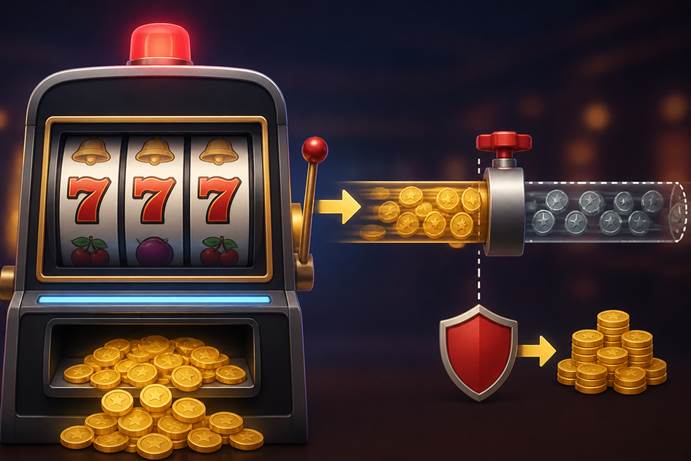
When you visit a casino, the flashing lights and enticing sounds of slot machines create an atmosphere where anything seems possible, yet the reality is governed by payout caps that limit the maximum amount any machine can dispense in a single session. A reference like http://simo-trial.de/ can provide another useful angle on the subject. These invisible boundaries are programmed into every slot machine to ensure the casino maintains its mathematical advantage while still offering the excitement of potential wins. For those researching how a casino regulates its biggest wins, exploring details at provides useful context on maximum win limits that vary between different machines and jurisdictions.

• The concept of payout caps is fundamental to how casino slot machines operate, though many players never consider these invisible ceilings until they encounter them firsthand

•         Understanding how slot payout caps work reveals the delicate balance casinos must strike between entertainment and mathematics

•         In contrast, standalone machines typically feature more modest caps that reflect their isolated nature and lower player contribution pools

What to Know About Payout

The concept of payout caps is fundamental to how casino slot machines operate, though many players never consider these invisible ceilings until they encounter them firsthand. Each slot machine contains a predetermined maximum payout value that cannot be exceeded regardless of how rare or valuable a winning combination might be. This cap exists in both physical and digital casinos, ensuring that even the most improbable jackpot remains within calculated parameters that preserve the house edge over time. The casino industry relies on these caps to maintain profitability while still offering life-changing sums that attract players seeking fortune.

Understanding how slot payout caps work reveals the delicate balance casinos must strike between entertainment and mathematics. While the presence of caps might seem restrictive, they actually enable casinos to offer larger potential payouts than would otherwise be mathematically feasible. Without these limits, the house edge would need to be significantly higher, making slot machines far less appealing to players. The caps allow for more generous individual payouts while maintaining the casino’s overall statistical advantage across thousands of spins from all players combined. This mathematical framework ensures that both the casino and players can coexist in a sustainable ecosystem of chance.

What to Know About Machines

The practical implications of payout caps become apparent when examining different types of slot machines and their respective maximum win potentials. Progressive jackpot slots often have the highest caps, with some reaching into the millions, but these extreme values are achieved through networked contributions from multiple machines or casinos. In contrast, standalone machines typically feature more modest caps that reflect their isolated nature and lower player contribution pools. Players who understand these distinctions can make more informed decisions about which machines offer the best balance between their entertainment budget and potential returns, transforming what might otherwise be a random guessing game into a more calculated approach to gaming.

Area

What to know

Context

The concept of payout caps is fundamental to how casino slot machines operate, though many players never consider these invisible ceilings until they encounter them firsthand.

Consideration

Understanding how slot payout caps work reveals the delicate balance casinos must strike between entertainment and mathematics.

Practical takeaway

The practical implications of payout caps become apparent when examining different types of slot machines and their respective maximum win potentials.

How Casino Experience Connects With Payout

For regular casino visitors, recognizing the presence of payout caps transforms the slot machine experience from a desperate pursuit of impossible riches into a more controlled form of entertainment where expectations align with mathematical reality. The flashing lights and celebratory sounds remain, but players who understand payout caps can set realistic expectations and choose games that match their entertainment goals rather than chasing impossible outcomes. This balanced perspective doesn’t diminish the thrill of winning but rather provides a framework for responsible participation in an activity governed by both chance and carefully calculated limits that ensure the casino remains viable while still offering genuine winning opportunities.